Staff Report
During Major League Baseball spring training, South Jersey Glory Days Staff Writer Dave “Sully” O’Sullivan caught up with former Holy Spirit two-sport standout Trevor Cohen, who is beginning his first full season of professional baseball after being selected in the third round (85th overall) of last year’s draft by the San Francisco Giants.
Cohen, a Brigantine native, had a tremendous collegiate baseball career at Rutgers University, where he hit .338 with 39 doubles, 131 runs scored, 223 hits, 100 RBIs and 39 stolen bases in three seasons as a Scarlet Knight before declaring for the draft after his junior year.
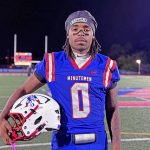
As a senior at Holy Spirit in 2022, he hit .505 and set a school record with nine home runs and was named first-team All-State. He also played quarterback while at Spirit, guiding the Spartans to Non-Public B state championships as a sophomore and junior.
Check out Sully’s conversation with Cohen as he was preparing for the 2026 season, where he’s starting out as an outfielder for the high single-A Eugune Emeralds (Eugene, Ore.) of the Northwest League. In 28 games last year with the single-A San Jose Giants after being drafted, Cohen hit .327 with 35 hits and 15 RBIs. He’s looking for an even better showing in 2026 with the Emeralds.
SULLY: You knew you had a great career in college. What were you expecting when the 2025 draft came along?
COHEN: Honestly, I really didn’t know what to expect. It’s kind of a scary process. You really don’t know much, and no one really has the answers. Going into junior year, I just was focused on Rutgers and playing well there. And I figured the pieces would line up if all things went right at Rutgers, and they did. I really didn’t hear much. I heard rumblings of between what rounds I would go in, but not until draft day did I know that it was going to be the third round.
SULLY: How much of the projection was a factor of whether to go into the draft or come back for another year at Rutgers? Was it like, hey, if I’m projected to go in the first five rounds I’ll go, if not, I’ll come back?
COHEN: Honestly, I was going to go no matter what. I was ready to go. I was prepared to play pro ball. I loved being at Rutgers, but I kind of wanted to take the next step. I was ready to go after junior year. I made my decision that I was just going to go in and see what would happen.
SULLY: What did your parents (Trevor and Laura) say? Did they try to give you any kind of advice? Did you seek advice, did you talk about it as a family, or did they say, ‘hey, it’s your decision’?
COHEN: We had talks as family and with my agent, but they left it up to me to decide. They said they would support whatever was happening, but I made the decision that if I want to play pro ball, this year is the year.
SULLY: How do you know when that moment comes? Are you laying on your bed, tossing a baseball up in the air at 1 a.m.? Driving to Wawa? How does it come to you? Like, OK, boom, I’m doing this.
COHEN: I knew many years before. Probably my freshman year of college. I had a pretty good year as a freshman and kind of thought to myself, this is getting real, I’m starting to get noticed a little bit more. I’m playing with guys who are getting drafted and I’m playing as well as them, if not better sometimes.
SULLY: How crazy is it to think now you’ll be a full-time professional baseball player, and four years ago you were taking bus trips to Lower Cape May and Vineland?
COHEN: Yeah, it’s pretty wild.
SULLY: That’s a very short amount of time where you’re facing a 15-year-old sophomore, and then four years later, you’re facing pro guys throwing 98 miles-per-hour. How do you kind of square that in your head?
COHEN: I really don’t. You kind of brought it up for the first time, honestly. But I guess as you get older, the training gets more intense. And then as you go from high school to college, the level of competition goes up and you start to see guys who are really good and you’re facing them on Friday nights when it really means something. And there’s a million people there and the emotions are high and you kind of sit back like, man, this is real. It’s funny you say that because I’ve never really thought about it that way. Facing 15-year-olds four years ago and now facing guys throwing 100. It’s kind of crazy.

SULLY: I cover high school sports so I’m around these guys all the time and a lot of guys think they’re great. They think they’re going pro. What would you tell a kid now about how difficult it is to go from being a kid at Holy Spirit, taking a couple rounds of BP in 40-degree weather in March, to being a pro. That’s a pretty big jump, right?
COHEN: It’s a HUGE jump. What I really appreciated was I never really looked forward. I kind of just stayed where my feet were in the moment. And if I was in high school hitting BP in 40 degrees, then I was in high school hitting BP in 40 degrees. I wasn’t really thinking about, hey, in four years I have a chance to be a pro. It was like, ‘let’s finish this round of BP and then on to the next.’ When you look ahead, you lose the vision of what you’re trying to do that day or that year. That’s my best advice because being a pro is incredibly hard every day. It’s a grind. You’re playing six days a week, you’re traveling, you’re on 8-hour bus rides. So, I don’t really look ahead, because when you do, that’s when you hurt yourself in the moment.
SULLY: What do you remember about when you were in high school and what you thought about your future? I’m sure you had times when you were daydreaming about putting on a Major League hat and being drafted and all that stuff. How cool is it now thinking back about those times?
COHEN: It’s great. It was always a dream for as long as I can remember. I looked up to so many MLB guys and really looked forward to putting on like a Major League uniform and being around guys that are pros. But the work has to happen. I never really understood until now that everything that happened prior to getting drafted was the reason I got drafted, which is kind of crazy to think about. You go to high school and you think about how everyone says they want to go play pro ball. That’s the goal. In my head, I really believed it, no matter what. And it wasn’t me just saying it or just saying it to my parents or friends, I truly believed that I was going to make it happen no matter what.
SULLY: What did you learn about yourself as a ball player when you went to Rutgers? You were the best player at Holy Spirit, but when you go to college — especially in that kind of conference — every guy was the best guy on their high school team.
COHEN: As a freshman it’s a little scary because you show up and there are these guys who are grown men and you’re 17 years old. You’ve lifted weights, but you don’t look like that yet. And these guys are faster than you, stronger than you, smarter than you. They know how to handle pressure better than you. But the best part is learning from them. I was really good at observing and understanding how to watch other guys. I would watch guys do everything — how they put their cleats on, how they showed up to practice, how they took care of their business, and you make it a habit by just watching them do it.
SULLY: I’ve always said you can tell if a ball player is good before they even put their uniform on. Just the way they walk into the stadium, the way they get dressed. There’s a different air about a guy who knows what he’s doing out there, right?
COHEN: Absolutely. And especially facing them or playing with them, you can tell you’re not the only person watching them either. It’s the other teams looking at them and seeing like, damn, that kid’s got his s&$# together. Like he’s a pro and he’s not even a pro yet.
SULLY: What has this last year been like for you? What was the introductory process like with the Giants?
COHEN: It was great. Last summer was absolute chaos; phone calls, meetings. Hearing from teams and talking with agents, parents, family — you kind of lose the enjoyment of it almost. Going to the combine was a really cool experience, seeing where you stand next to the first pick in the draft or a bunch of first-rounders. It becomes real. When I got to the Giants, it was very calming and reassuring the way they handled our draft camp and told us how things are really going to go. Because when we got there, all of my draft class, it was just us there. So they really took the time to focus on us. And it was a lot of individual stuff, like making sure we were good when we were there — were we there on time, doing the right thing, showing up, and knowing what to do when you get to the field, or how to get your body prepped, or even how to handle your first offseason. They were extremely helpful to all of us, and it was really reassuring.
SULLY: How did they teach you to be a pro? What kind of things do they tell you? I’m sure it’s a lot different than being a college baseball player.
COHEN: There’s a lot more that goes into it because it’s your job. You’re getting paid to do it, and these people invest money in you. It was more about being able to take care of your body every day because you’re playing 100 more games than in a college season. That’s a lot of baseball, and it gets extremely repetitive. Same things every day. You’re showing up at the same time. You’re doing the same early work. You’re throwing at the same time. And they kind of just teach you about the game. It becomes really, really repetitive, but you have to learn how to appreciate the repetitive and build your own routine. Like if you’re going through a struggle at the plate, you have to learn how to handle things on your own. You have to know your swing. You have to know how to take care of your arm by yourself. And it was a lot at once. But being able to play in an affiliate right after I got drafted was also a blessing because I was able to see it. I was able to see how it was done and learn from other guys who were there all year. Seeing those guys, they’re tired but they’re still playing well. How do they do it? How do they take care of their bodies enough so that they can play at 70 percent but still perform? So that was a really big thing for me.

SULLY: Have the Giants told you what the expectations are for you, or do they just take all their minor-leaguers and put them out there on the field and see what happens and see who rises to the top?
COHEN: It’s not too much expectation. I think I set the bar in that single-A season (for the San Jose Giants last summer) for what I really can do; being able to perform and help a team win a championship. I assume that the expectations are high because of how well I performed in my first taste of pro ball (.327, 15 RBIs, 23 runs in 28 games). But they really don’t tell you (what the expectations are), they just let you go and let you play and see where you’re at.
SULLY: How do you feel now physically, because you’re getting ready to play, 120, 130 games, right? Are you ready for that? What kind of things did you do this offseason to get ready for what’s really going to be the first big grind of your life?
COHEN: I really focused on getting in shape for that, getting my body in shape, a lot of conditioning, putting on some pounds. Along with hitting every day and throwing every day and doing all that baseball activity, there was a lot that went into conditioning and getting my body ready for that long of a season.
SULLY: How excited are you now? This has got to be an awesome time in your life. You had a great college career, you’re a third-round draft pick and now you get to go out and show what you’re all about. This has to be a thrilling time for you, right?
COHEN: Yeah, for sure. I’m ready to go. I feel like I’m ready as I can be. I’m really excited to just go play baseball.
SULLY: A couple of high school questions. How much did playing football and being a quarterback help you in your baseball career?
COHEN: A ton. I say it all the time, there’s an aspect of toughness (to football). Quarterback is different. You’re getting hit. You’re not the one delivering the hits. You’re the one that is always getting hit, and you have to control 10 other guys and know your stuff. You have to know what they’re doing, you have to know what you’re doing. You have to know everyone’s assignment. All that before the ball is even snapped. It helped me more from a controlling-my-emotions standpoint and being able to go through the ups and downs of a game. I’m so grateful for playing football because I don’t know how I would be without it.

SULLY: What do you miss most about the Friday Night Lights?
COHEN: Winning! Just being out there with everyone. I feel like football is a different bond. There’s blood, there’s sweat. It’s just a different type of grind when it comes to football. There are a lot of relationships that you build, especially being in my position as a quarterback. You have to be best friends with everyone. You have to know everyone. You have to know what they’re good at, what they’re not good at, what they do on every single play. Yeah, I miss that a lot.
SULLY: What would you tell your high school self if you could go back and have a conversation with him in the locker room?
COHEN: That’s a good question. Probably air it out a little bit more. Let the ball go a little bit more. Maybe run a little bit more, too.
SULLY: What about high school in general? What do you remember most about? It’s only been a couple of years, obviously, but what was it like going to Holy Spirit?
COHEN: It was great. I loved Holy Spirit. It was like a family. I felt like the sports side and even the school — It’s such a small school, you know everyone, you know their faces. And it was a really good community to be a part of, especially being in the position I was playing baseball and football. There was a lot of support from the alumni and the donors, and the coaches really cared. It was about winning, but it was also about your future and building relationships and making sure everyone was in the right spot to have a good future.
SULLY: Mike Trout has the thing at Millville where each year the team captain gets to wear his jersey No. 1. What’s going to be the Trevor Cohen thing? Are you going to buy some cleats or have the Trevor Cohen commemorative bat?
COHEN: I like the bat idea. Give them a bunch of bats, because those things are expensive. I don’t know, I haven’t thought about the football side yet, though. Maybe some cool tinted visors or something.
SULLY: Anything else you want to say to the South Jersey Glory Days fan base out there?
COHEN: I guess for the high school kids, just enjoy it. It’s such a fun ride, especially when you want to play in college and the whole experience of finding the college and playing high level baseball. South Jersey has blown up with baseball recently. My advice is, you’re playing in a really good spot in New Jersey and you’re playing against good competition, so just enjoy it and make some fun out of it.