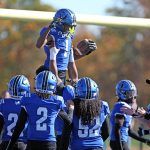
Question: Focus on concussions has increased dramatically during the last several years. Do concussions affect teenagers any differently than they might a collegiate or professional athlete? And what should parents be watching for in the weeks and months that follow their son or daughter suffering a concussion during a high school sport? Answer: While I do not have exact statistics on the occurrences of concussions in college vs. high school, I can say that concussions are on the rise in all levels of sports — college, high school and youth. This is mainly due to both the increased physicality in sport and the emphasis on recognizing and reporting mild concussions.  Pat Dioguardo, Mainland Regional High School athletic trainer. Interestingly, research has shown that while football remains No. 1 in occurrences at about 40 percent of all concussions, girls soccer is No. 2 at 21 percent, even higher than boys soccer. I can say from personal experience as an athletic trainer at the high school level, it’s taking its toll on players from many sports. Concussions can occur from head-to-head, head-to-ground, ball-to-head, elbows to the head or face, goal posts and even heading the soccer ball. Concussions can occur from whiplash and/or rotational forces on the head as well. There are now state mandated protocols on how concussions are treated and how long the “Return to Play Protocol” will take when concussions occur in athletes at the high school and collegiate levels. Many schools, including Mainland Regional, conduct baseline concussion testing for all “at risk” athletes as part of the normal preseason screenings and physicals. Also, now a doctor specializing in concussion management works closely with trainers and the doctor has final say when an athlete is cleared to return. What parents need to know is that the days of “getting your bell rung” or getting a “dinger” and going back in the game that day or the next no longer exist. Since most youth sports programs do not have the benefit of having trainers or doctors on the sidelines, coaches, parents and athletes need to be educated at that level the most. Especially when research has shown that athletes under the age of 14 or 15 are particularly susceptible to damage to the brain due to a head injury! Any sign or symptom that happens to an athlete due to a collision or contact is a mild traumatic brain injury (MTBI) and is to be treated with due diligence and err on the side of caution. What parents should also know is to seek out one of the doctors in the area who specializes in treating concussions, and that there is much more emphasis now on the cognitive issues that linger far after your “headache” goes away. It is quite often subtle changes in concentration, sensitivity to light or noise, mood changes, irritability, etc., that most parents and athletes don’t look for that have become very important in the follow-up after a concussion. A good source to for more knowledge is Robert Cantu M.D., from Boston University’s School of Medicine and his book, Concussions and our Kids, or parents can check out the NJSIAA website for some of the new guidelines and mandates. Pat Dioguardo is the athletic trainer at Mainland Regional High School. He has a degree in health and athletic training from West Chester University and a Master’s degree from Temple University. He has been the trainer at Mainland since 1989 and also is a licensed personal trainer. Have a question for “Ask the trainer”? Email Glory Days Magazine publisher Dave O’Sullivan: sully@acglorydays.com.
Ask the trainer: Concussions are more than just “getting your bell rung”